


Nearly forty-one percent of weather-related car crashes in the U.S. result from snow, sleet, ice, or slush. While having AWD in your vehicle doesn’t make it indestructible in the snow, the added traction definitely helps.
Here are our top 8 recommendations for a used AWD car if you have a tight budget:
1. 2017 Subaru Impreza
Engine: 152-hp 2.0L F4
EPA-Estimated Fuel Economy: Up to 32 MPG (City – 28 MPG / Highway – 38 MPG)
Car Key Points
- Practical and fuss-free choice for a four-season daily driver.
- Top Safety Pick+ (IIHS)
- Up to 32 MPG and 27 MPG combined with CVT and Manual transmission respectively
- Underpowered but CVT does improve initial response
- Available Subaru EyeSight driver assist tech (Limited trim)
- Hatch has better trunk space than the sedan
- Standard 6.5-inch touchscreen infotainment system and available 8.0-inch unit
- Standard Apple CarPlay and Android Auto compatibility
- Highly regarded reliability
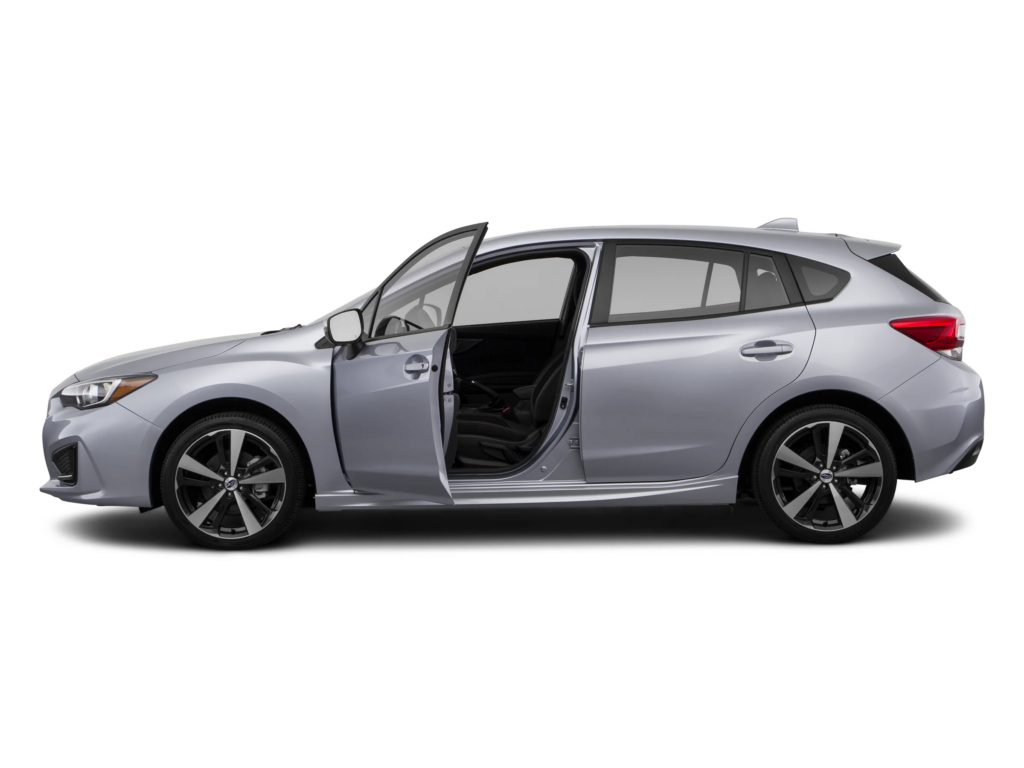
Overview
Back in the late 1990s, Subaru boldly made all-wheel drive a standard feature across their entire lineup, a decision that made them the go-to-choice for those residing in snow-prone regions.
The Subaru Impreza is a certified bargain for anyone seeking good all-weather performance on a budget. The fifth-generation Impreza, introduced in 2017, marked a significant leap forward. Built on the Subaru Global Platform, although it doesn’t share the rally-inspired traits of the WRX, it offers a level of practicality that’s a step up from the previous generation.
For starters, the 2017 Impreza is both wider and longer than the previous models making the already spacious cabin even more accommodating. The cabin is nicely designed and there’s a healthy number of standard contemporaries including user-friendly infotainment tech.
Yes, there are shortcomings too. While the interior has seen updates, material quality doesn’t quite match class leaders. But the biggest drawback lies in the underpowered four-cylinder engine, with the modest 4-horsepower increase from the previous generation failing to make a substantial difference.
Nevertheless, the Subaru Impreza is a user-friendly and hassle-free companion, offering assured handling around corners while effectively cushioning passengers from road imperfections. What’s more, it scores top marks in safety and offers a plethora of active safety options that are hard to match in the compact car category.
In summary, if you’re seeking an affordable and sure-footed AWD sedan that delivers stability and confidence in all driving conditions, the Impreza stands as your go-to option within its class.
Pros:
- Spacious and serene cabin for a compact vehicle
- Standard all-wheel drive system ensures traction in all conditions
- Extensive array of available safety features, contributing to excellent safety ratings.
- Good balance between ride quality and handling.
Cons:
- Sluggish acceleration
- Noisy transmission under heavy loads
- Unrefined manual transmission
- Limited cargo space, especially in the sedan version
Related: Best Cars in the Snow
2. 2015 Subaru WRX
Engine: 268-hp 2.0L Turbo F4
EPA-Estimated Fuel Economy: Up to 24 MPG (City – 21 MPG / Highway – 28 MPG)
Car Key Points
- Fully redesigned for 2015 model year
- Legendary rally-car heritage
- VA series (fourth generation) is the start of the independent WRX moniker
- Brake-based torque vectoring for the all-wheel-drive system
- Up to 40% stiffer chassis than the models before
- Up to 21 MPG and 24 MPG combined with CVT and Manual transmission respectively
- Top Safety Pick (IIHS)
- Improved interior quality and space than before
- Niceties like Sunroof, heated mirrors, heated front seats offered on Premium trims
- Backseat can accommodate adults occasionally (access and legroom are both reasonable)
- 12 Cubic feet of cargo capacity (expandable)
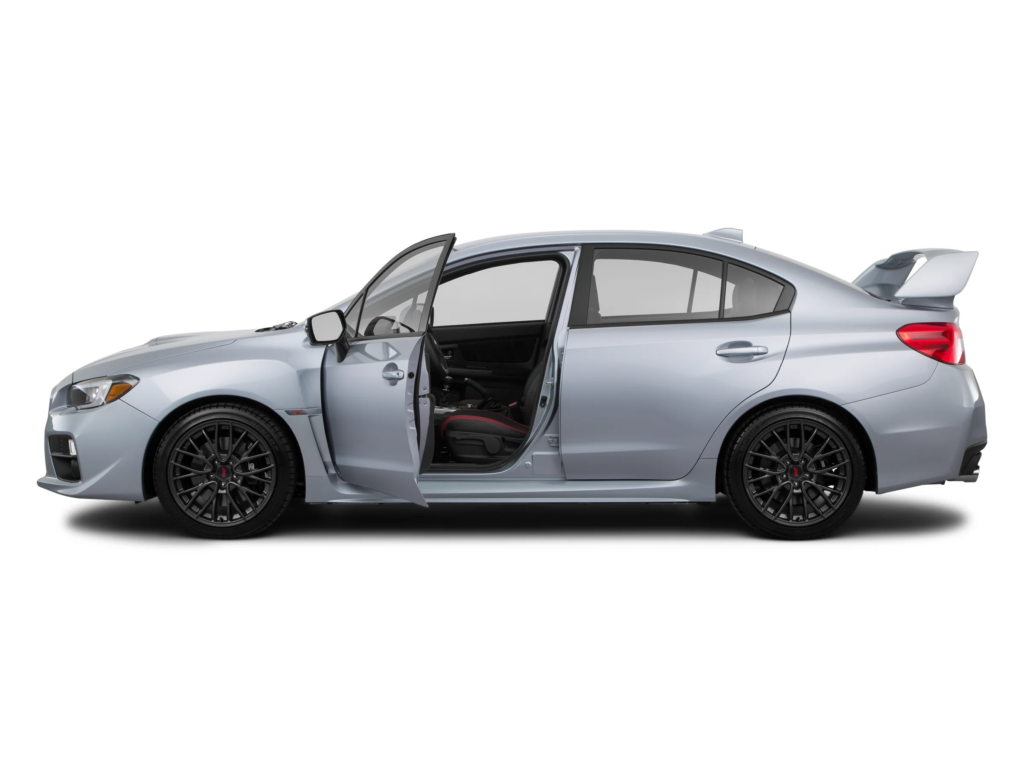
Overview
For affordable all-weather fun, the Subaru WRX is unbeatable. Transitioning from a JDM rally car to today’s versatile turbocharged performer, the WRX embodies the adaptability of a Swiss Army knife. Whether on the track, rally stage, or city streets, few cars match the WRX’s prowess.
After years of being a subset of the Impreza, 2014 saw the emergence of an all-new Subaru WRX, finally granted its independence in the Japanese brand’s model lineup. Technically the fourth generation but officially the first under the standalone WRX moniker, the VA series WRX and the STI (Subaru Tecnica International) version had largely similar design to the Impreza but had a host of engineering distinctions including the chassis. Notably, the hatchback bodystyle was also discontinued.
Although the highest-spec WRX STI might stretch your budget, the standard WRX offers plenty to relish. Subaru introduced significant updates in 2018, but if you’re aiming for a sub-$20,000 WRX, earlier models are your ticket.
The 2015 Subaru WRX featured a 2.0-liter flat-four engine with 268 hp with standard six-speed manual and an available continuously variable transmission (CVT).
Regardless of the gearbox choice, the WRX accelerates with fervor, darting and zipping down the road as if its tail is ablaze. It sprints from 0 to 60 mph in under 6 seconds, with the car feeling even quicker in practice. And as wild as the WRX has ever been, the updated powertrain is strong throughout its rev range with a midrange power rush that quickly becomes addictive.
In terms of handling, the 2015 WRX eagerly dives into corners and conquers twisty roads with confidence unmatched by front-wheel-drive rivals.
However, the ride can be a bit rough, and the freeway noise remains a drawback. Nevertheless, with 268 hp at your disposal, these shortcomings are easy to overlook. Born from the heat of rally racing, the Subaru WRX is a compact performance rocket always ready for action, and its all-wheel drive ensures you’re prepared in case a blanket of snow welcomes you on your commute.
Pros:
- Energetic four-cylinder engine with exceptionally rapid acceleration
- Remarkably precise handling
- Standard all-wheel drive system for secure traction
- Unapologetically raw and thrilling rally-inspired performance characteristics
Cons:
- Elevated levels of wind and road noise
- Optional touchscreen interface can be challenging to use
- Cabin design is fairly basic in its presentation
3. 2017 Ford Fusion
Engine: 245-hp Turbo 2.0-liter I4; 325-hp 2.7L V6
EPA-Estimated Fuel Economy: Up to 23 MPG (City – 20 MPG / Highway – 29 MPG); Up to 20 MPG (City – 17 MPG / Highway – 26 MPG)
Car Key Points
- All-wheel only offered with 2.0-liter turbo (optional) and 2.7-liter V6 (standard)
- Depending on trim, the Fusion can be spartan or luxurious
- Top safety pick (IIHS)
- Available advanced driver assistance features
- Good reliability ratings
- Available 8-inch central LCD touchscreen with Sync 3 technology interface
- Sport trim has sharper driving credentials thanks to its standard adaptive dampers
- The 2.7-V6 comes straight from the F-150 truck and makes a staggering 380 lb-ft of torque
Overview
Until recently, all-wheel drive was an uncommon choice for mid-size family sedans. However, the Ford Fusion broke the mold by offering this option long before others, serving as the sole contender to the Subaru Legacy.
The third-generation Ford Fusion, which spanned from 2013 to 2020, was a delightful surprise. It combined European flair with an affordable price tag, challenging the notion that midsize family sedans couldn’t be stylish, luxurious, or fun to drive, while still offering the space, safety, and practicality as its more conservative rivals offered.
In 2017, Ford introduced a series of mid-cycle upgrades for the Fusion, including the new Sync 3 infotainment system, a significant improvement over the older MyFord Touch interface it replaced. The front and rear styling also received a refreshing makeover, and most notably, two new trim levels made their debut.
The ultra-luxe Platinum trim level offered a leather-clad interior loaded with premium features, rivaling entry-level luxury cars in opulence. Switching focus from comfort to speed, Ford introduced a 325-hp 2.7-liter turbocharged V6 sport model that came with standard all-wheel drive.
A variety of more accessible engines were also offered, but all wheel drive was only available with the 2.0 liter turbocharged engine. That’s no bad thing though, since you would want to skip the base lackluster engines.
The Ford Fusion is no sports car in athleticism, but a sweet mix of both worlds. It delivers a comfortable yet assured ride quality that sets it apart from its family sedan competitors. Its handling remains stable and controlled, and the precise steering instills confidence in the driver.
Pros:
- Impressive balance of agile handling and a comfortable ride
- Turbocharged engines deliver more energetic acceleration than many rivals
- Diverse range of options
- Interior can be upgraded to near-luxury standards
Cons:
- Base tech interface is notably less user-friendly compared to rival systems.
- Real-world fuel efficiency might leave room for disappointment.
- Getting the available all wheel drive option can become expensive
4. 2019 Mazda 3
Engine: 186-hp 2.5L I4
EPA-Estimated Fuel Economy: Up to 28 MPG (City – 25 MPG / Highway – 33 MPG)
Car Key Points
- Among the classiest compact-cars
- Top Safety Pick (IIHS)
- Optional All-wheel drive ($1,400) is available starting from the Select package (second base trim)
- The Select package adds a ton of useful features including advanced driver assistance tech
- Stepping up to the Premium package makes the Mazda 3’s cabin worthy of an Audi badge
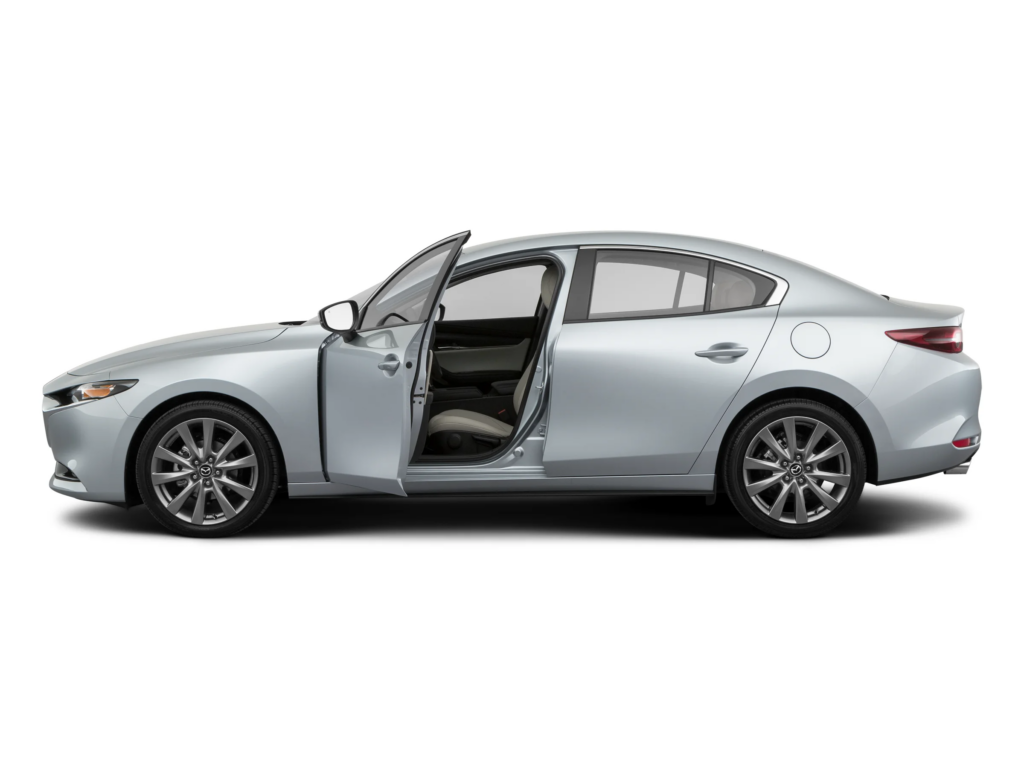
Overview
In the 2019 model year, Mazda introduced one of the nicest compact cars in the market, with the added option of all-wheel drive (AWD). The fully redesigned fourth-gen Mazda 3’s aggressive yet elegant lines on the outside, a near luxury-car like interior, and generations-long aptitude for sharp handling, can often lead people into mistaking it for a much pricier vehicle. And with the optional AWD (only on automatic models), the 2019 Mazda 3 benefits from improved traction on slippery surfaces like snow.
Just remember that you will have to live with a slightly cramped rear-seat space. The hatchback’s design compromises visibility, so it’s advisable to opt for the more practical sedan version. The infotainment system looks sharp but can only be operated using a rotary controller, which may be initially frustrating. But again, the superbly rich quality of materials in the interior does make up for that.
The 2019 Mazda 3 is powered by a sole 2.5-liter four-cylinder engine. While the engine makes only 186-hp, it responds quickly to gas-pedal inputs. Coupled with quick steering, an agile chassis, and a composed ride, the Mazda 3 excels in driver engagement.
In the grand scheme of things, except some minor compromises, there’s nothing here that should seriously deter potential buyers. The 2019 Mazda 3 not only offers a more upscale alternative to rivals like the Honda Civic and Toyota Corolla but also stands out as one of the rare used compact car options with the flexibility of AWD.
Pros:
- Top-notch interior materials in top-tier trims
- Exceptionally comfortable and supportive seats
- Engaging and spirited handling
- Exudes a more upscale appearance compared to competitors
Cons:
- Limited legroom in the rear seat
- Lack of a dedicated high-performance model
- Reduced rear visibility in the hatchback version
- Key features are specific to certain trim levels
- Cargo space is less ample compared to other compact sedans
5. 2011 Infiniti G37x
Engine: 328-hp (sedan) / 330-hp (coupe) 3.7L V6
EPA-Estimated Fuel Economy: Up to 20 MPG (City – 18 MPG / Highway – 25 MPG)
Car Key Points
- From family duties to sports car fun, handles it all
- G37x models have all the features of the Journey trims along with all-wheel drive
- compelling handling thanks to the Nissan Z sourced platform
- Adding the Sport package makes the G37x even sharper around corners
- Commendable steering feel
- Plethora of high-end features

Overview
If you’re in the market for an all-wheel drive luxury-sport sedan without breaking the bank, the 2011 Infiniti G37x is a solid choice. Often overlooked, the G37 offers excellent value, featuring a 328-hp V6 engine and available all-wheel drive, all for a price similar to that of a rear-drive BMW 3 Series that has significantly less power. And if the traditional sedan body style doesn’t suit your taste, Infiniti also offered a stylish coupe version with AWD.
The G37 took over from the G35 in 2008, and in 2009, the Japanese luxury brand introduced the all-wheel drive G37x variant. In 2011, Infiniti expanded the G sedan lineup by adding the lower-powered G25, which also had an all-wheel drive version called the G25x. However, we recommend upgrading to the G37x, as it not only offers more excitement but is also slightly easier to find.
The 2011 G37x’s V6 engine is quite capable, propelling the car from 0 to 60 mph in under 6 seconds. While the engine may produce some coarse noises at higher RPMs, the thrill and acceleration it provides are unbeatable for the price.
The G’s handling is another notable highlight, as it attacks curves with enthusiasm and precision while maintaining composure and comfort when driven over less-than-ideal road surfaces. The AWD system not only provides confidence in poor weather but also improves power delivery in fair conditions.
In summary, the 2011 Infiniti G Sedan offers exceptional value in terms of performance, space, luxury, convenience, and advanced features.
Pros
- Potent V6 engine with ample power
- Precise and responsive handling
- Effective braking system
- User-friendly and advanced high-tech features
- Attractive pricing, offering strong value for the money
Cons:
- Limited rear seat space
- Engine can become noisy at high RPM.
- Elevated road noise
- Interior doesn’t match the luxury standards of European rivals
6. 2015 Dodge Charger
Engine: 292-hp 3.6L V6
EPA-Estimated Fuel Economy: Up to 21 MPG (City – 18 MPG / Highway – 27 MPG)
Car Key Points
- Part muscle car and part family hauler
- Available All-wheel drive (V6 only)
- Available electronic driver aids (SXT)
- 8.4-inch touchscreen interface with Uconnect offered on SXT is quite competent
- Optional Flashy Rallye Group (SXT) adds performance upgrades and bumps power to 300hp
- About 4096 pounds of weight makes the V6 Charger slower than other front wheel drive large sedans
- 16.5 cu.ft. of cargo capacity (with rear seats up)
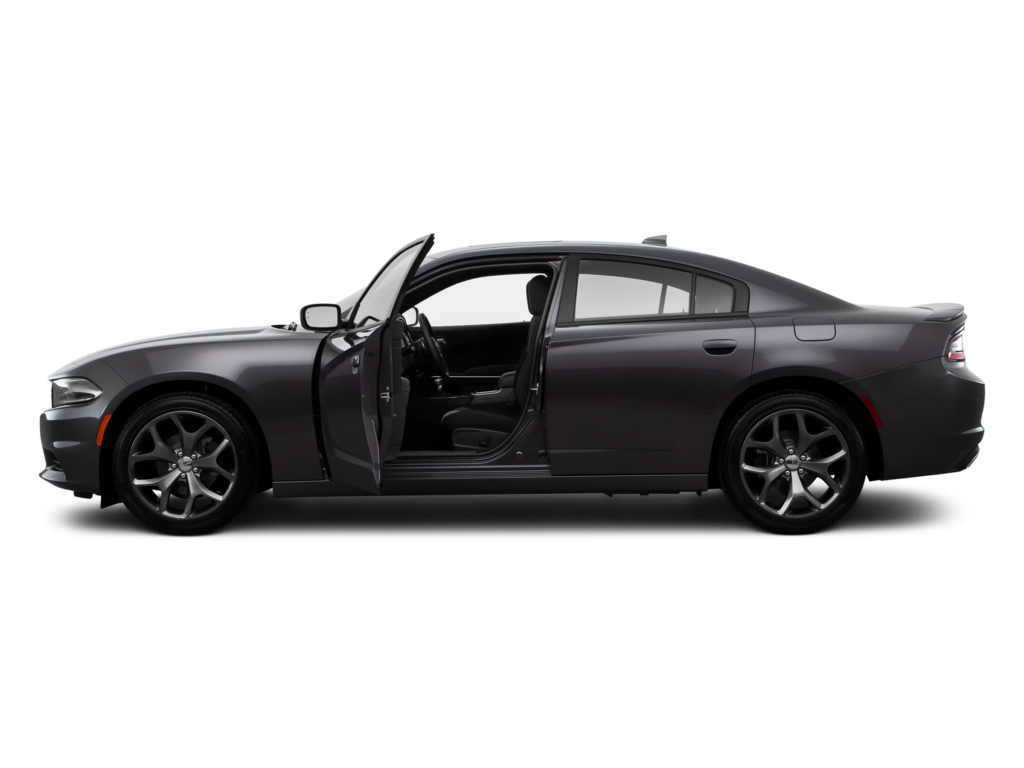
Overview
If you want an unapologetic American muscle-car sedan but with the security of all wheel drive, and have less than 20k to spend, Dodge has you covered. The Dodge Charger has long been a fixture in the American car market, offering affordable power and fun while providing ample room for the whole family.
This timeless sedan has been tearing up the roads for many years, and in 2015, Dodge delivered a comprehensive facelift to the latest 7th generation of the Charger. Fresh front- and rear-end styling gave the Charger a sleeker appearance, while the interior benefited from increased refinement as well as the inclusion of a larger selection of advanced electronics features.
Dodge also introduced four new V8 models, including the outrageous Charger Hellcat with its 707-hp supercharged V8. However, these V8 models are not only pricier but are exclusively available with rear-wheel drive. To enjoy all-weather traction, you’ll need to stick with the V6.
While the reliable Pentastar V6 won’t wake up your neighbors with its roar and may seem less in line with the Charger’s bad-boy image, it still delivers satisfying acceleration, if not thrilling.
The V6 also offers decent highway fuel economy for a large sedan. The ride is smooth and forgiving, and the handling is surprisingly well-controlled considering the car’s substantial weight and dimensions.
Being a four-door large sedan at the end of the day, the Charger offers plenty of hip and shoulder room, although intrusion from the driveshaft can make it a bit tight for three adults in the back.
Pros
- Smooth yet controlled ride for the V6
- roomy interior with solid build quality
- Aggressive looks
- Good handling for its size
Cons
- Limited rear visibility
- less rear legroom than other full-size sedans.
- Too much weight for the base V-6
- Lacks the luxury of its rivals (Abundance of plastic surfaces)
7. 2016 Subaru Legacy
Engine: 175-hp 2.5L F4; 256-hp 3.8L F6
EPA-Estimated Fuel Economy: Up to 30 MPG (City – 26 MPG / Highway – 36 MPG); Up to 23 MPG (City – 20 MPG / Highway – 29 MPG)
Car Key Points
- Top safety pick+ (IIHS)
- Impressive 30 mpg combined with four-cylinder considering all-wheel drive
- Better ride on limited models with retuned suspension for 2016 model year
- Firm, supportive seats with slightly elevated driving position is a plus
- Available upgraded audio system with a 7-inch touchscreen display
- At Least the Premium trim is required for Subaru’s optional EyeSight system
- Dual-zone climate control, heated seats, windshield wipers, and mirrors also offered on Premium trim
- Flat 6 engine reserved to top-end trim
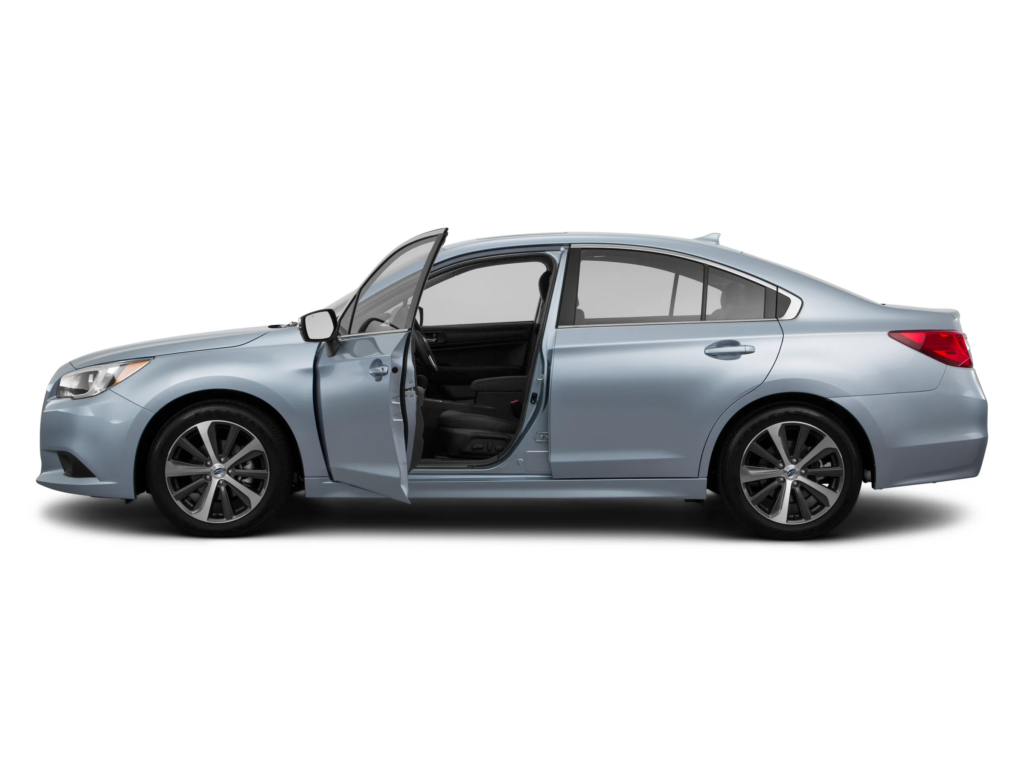
Overview
Finding yourself skidding off the road and into a ditch is a real buzzkill. Especially during the winter months, the 2016 Subaru Legacy should definitely be on your radar. With a plethora of used options priced below 20k, this mid-size family sedan can be your ideal companion for slippery scenarios.
Even when the sun graces the skies, the Legacy still boasts its charms. Subaru unveiled the redesigned 6th generation Legacy in 2015, aiming to provide more than just all-weather reliability. A fresh look, improved fuel efficiency, enhanced passenger comfort, and an array of new safety features transform the remodeled Legacy into a far more competitive choice among its midsize counterparts.
However, the 2016 Subaru Legacy presents you with both a standard four-cylinder and a more robust six-cylinder engine. While both are admirably hushed and smooth, they tend to leave you wanting when it comes to acceleration.
On the bright side, despite the standard all-wheel drive, the Legacy’s fuel economy won’t put a dent in your pocket, especially with the four-cylinder.
Plus, the Legacy’s relatively nimble handling and serene, comfy ride, especially in Limited models, are qualities that midsize family sedan shoppers consistently prioritize. Let’s not forget the array of available active safety features and its top-notch crash test ratings.
In a nutshell, while there may be better all-around used mid-size family sedans out there, the 2016 Subaru Legacy steps up as a solid choice for those residing in frosty regions where all-wheel drive is non-negotiable. Its excellent safety, spacious cabin, composed ride, and its relatively wallet-friendly price tag are some of its added perks
Pros:
- Standard all-wheel drive, a rarity in this segment
- Exceptional outward visibility for safer driving
- Strong reputation for safety
- Comfortable ride on Limited models
Cons:
- Underwhelming base engine
- Turbocharged flat-six’s 256-hp feels better on paper than real-life
- The cabin lacks the premium feel found in some mid-size sedans
8. 2015 Audi S3
Engine: 292-hp 2.0L Turbo I4
EPA-Estimated Fuel Economy: Up to 26 MPG (City – 23 MPG / Highway – 31 MPG)
Car Key Points
- Higher-performance version of Audi’s regular A3 sedan
- The regular A3’s turbocharged 2.0-liter has been reworked for an increase of over 72 hp
- Standard all-wheel drive
- Sport-tuned suspension
- 60 mph in less than 5 seconds
- Host of standard amenities on offer
Overview
For those in search of an affordable Audi Quattro experience, the 2015 S3 Sedan emerges as an enticing choice. This compact Audi, boasting the brand’s renowned all-wheel drive technology, shares its underpinnings with the Golf on Volkswagen’s MQB platform. Under the hood, it packs the most potent iteration of VW’s 2.0-liter turbocharged engine available at the time.
The S3’s performance credentials are nothing short of spectacular. Not only does it owe this to its robust engine and slick dual-clutch transmission, but also to its featherweight construction, tipping the scales at a mere 3,300 pounds when wet.
Beyond its exceptional performance, the S3 exudes an air of dynamism with its striking visual appeal. Adorned with standard 18-inch wheels, it remains one of the more diminutive contenders in its segment. Astonishingly, its design has weathered the years gracefully, maintaining a modern and poised aesthetic.
Despite its compact footprint, the S3’s four-door sedan configuration ensures its suitability as a family car. But don’t be fooled by its unassuming size; a tap on the accelerator pedal will swiftly acquaint you with the true essence of the coveted S badge.
Pros
- Standard all-wheel drive
- Gutsy turbocharged four-cylinder engine
- Straightforward yet high-quality interior
- Nimble handling
Cons
- Limited leg space at the rear
- Cramped trunk
- Ride can be a bit stiff