
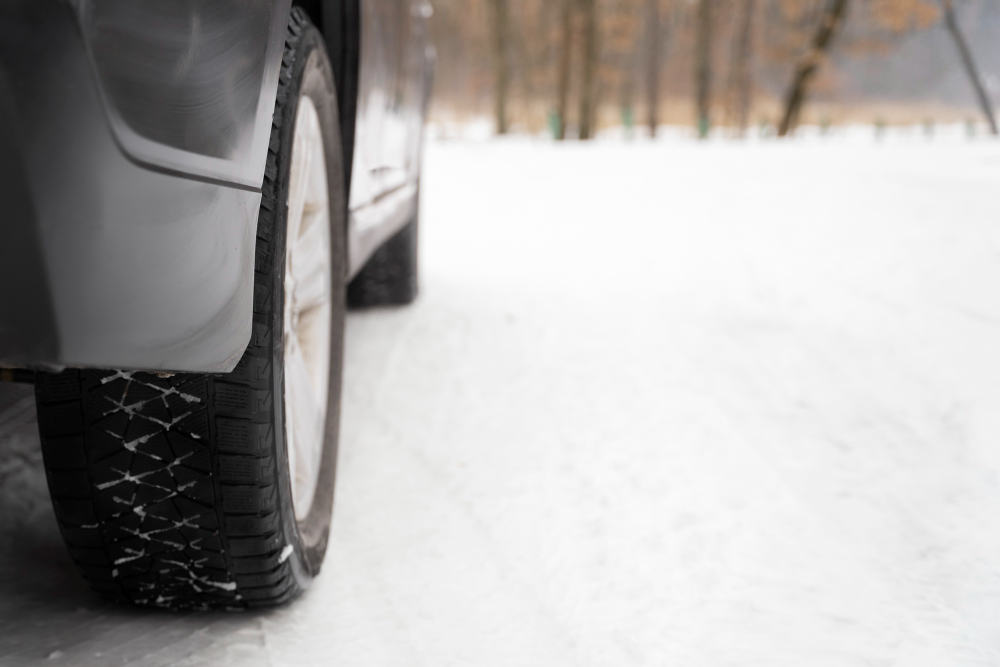

Winter driving often sparks spirited discussions, and let’s admit, much of it isn’t always rooted in pure logic.
- With all the hype around AWD, is it really effective and the premium worth it for snow, or would winter tires on a 2WD be a smarter choice?
- Or if you’re a proud owner of a Four Wheel Drive (4WD) or All Wheel Drive (AWD) vehicle, should you still invest in high-quality snow tires despite their rising popularity?
Nearly forty-one percent of weather-related car crashes in the U.S. result from snow, sleet, ice, or slush. We believe any misconception on this topic could prove life-threatening. So, here’s a simple yet in-depth guide, where we unravel all the chaos around winter driving.
Is AWD Really Effective for Snow?
Is AWD the ultimate solution for driving on winter roads? Not quite. Consumer Reports conducted comprehensive tests to address this very question. Let’s decipher the practical implications of AWD use during winter driving based on their findings.
Benefits with AWD
- Optimal traction is paramount for accelerating out well on slippery conditions like snow and any other expected hazards that winter brings. With power being automatically sent to the wheels that need it, all-wheel drive (AWD) proves to be exceptionally effective in these cases.
- The AWD system will not only provide enhanced acceleration on slippery surfaces but also make sure you aren’t stuck in snowed-in parking spots or unplowed roads.
Shortcomings: Do AWD Cars Slide on Ice?
- Granted, AWD enhances power distribution to the ground, but acceleration constitutes only one-third of the driving equation. In snowy conditions, AWD offers minimal assistance in turning and negligible benefits for stopping. All-wheel drive has nothing to do with control when you are not on your gas pedal.
- It’s a common pitfall for individuals to become overly confident in snowy conditions solely because they have an all-wheel-drive vehicle. However, the reality is that, in many instances, the right tires matter far more than having an AWD system.
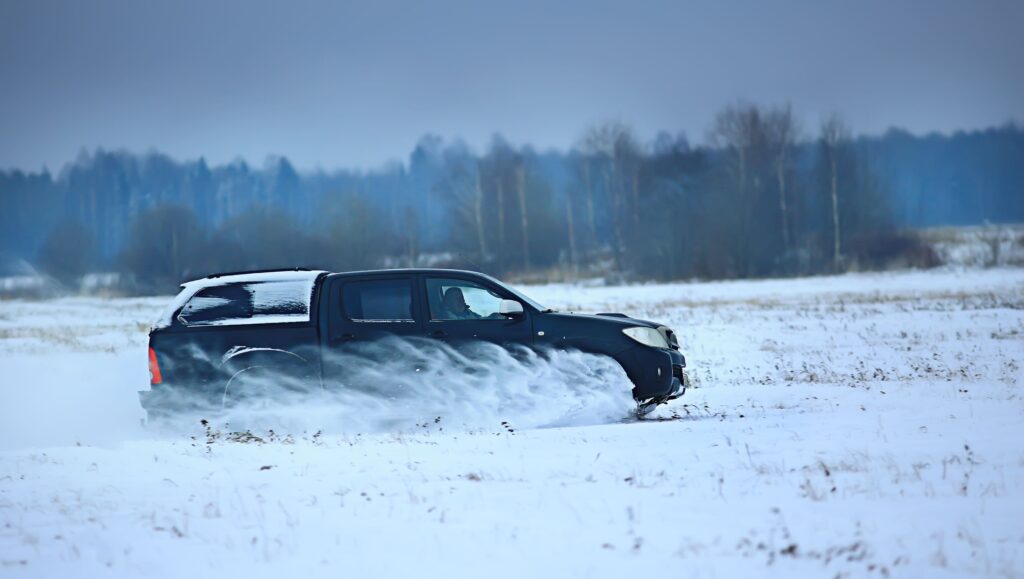
Related: What’s the Real Difference Between AWD and 4WD
How Useful are Snow Tires?
While all-season tires are meant to serve a variety of purposes, winter or snow tires are tailor-made for freezing temperatures.
- Treads with increased depth crafted to guide snow and inhibit buildup.
- Distinctive tread designs ensure efficient dispersal of water, slush, and snow.
- Unlike all-season tires, prone to stiffening in cold weather, snow tires employ specially-formulated rubber, maintaining flexibility even in subzero conditions.
No matter if your car directs power to the front or rear wheels, the improved traction afforded by winter tires is noteworthy. In fact, winter tires improve braking by up to 25% and can reduce the risk of a collision by around 38% compared to all-season tires.
While all-wheel drive crossovers might find themselves lodged in hedges or crashing through storefronts, your vehicle equipped with winter tires keeps moving forward.
Crucially, it’s not just about getting through deep snow and icy conditions—winter tires also help you steer and stop once you’re already in motion. In moments of panic on slippery or snowy roads, where your first instinct is to slam the brakes, winter tires truly show their value.

2WD Winter Tires vs AWD All-Season Tires: Head-to-Head Comparison
Can a 2WD vehicle equipped with winter tires outshine an AWD vehicle wrapped in all-season rubber in snow driving?
Well, Jonathan Benson from Tyre Reviews conducted a precise comparison to settle the debate. Two Mini Countryman S models took center stage, with one featuring Mini’s on-demand AWD system. The AWD variant was equipped with UK-spec Goodyear Vector 4Season Gen 3 all-season tires, while its front-wheel-drive (FWD) counterpart sported Goodyear UltraGrip Performance+ snow tires.
The extensive tests included acceleration trials on both flat surfaces and hills, braking assessments, and a handling test on a snow-covered road course.
The results are revealing:
- Acceleration Tests
The AWD-equipped Mini with all-season tires demonstrated a noteworthy advantage in acceleration tests—whether pulling away on level ground or tackling a hill start.
- Snow-Covered Braking Test
The FWD Mini with winter tires showcased the pivotal role of grip, achieving an impressive car-length shorter braking distance. This can be critical in emergency braking situations.
- Handling Course
While the all-wheel-drive vehicle spent less time exiting corners due to all four wheels converting traction into acceleration, its braking and turn-in performance lagged. In contrast, the 2WD vehicle exhibited superior control and predictable grip while navigating corners.
Winter Tires vs All-Wheel drive: What do you Really Need?
When it comes to winter driving, two things matter most: traction and grip.
Traction helps you accelerate on slick roads, and all-wheel or four-wheel drive is great for that.
But here’s the catch—many accidents don’t happen because you couldn’t go fast enough. They happen when you’re trying to stop or turn. That’s where grip becomes the real game-changer.
Winter tires are designed for exactly this. Both Consumer Reports and True Reviews confirm that they give you the best possible grip, whether you’re speeding up, slowing down, or taking a corner in extreme winter conditions. So, while they might cost a bit more, the investment is well worth it, especially when you consider the higher cost of opting for all-wheel drive.
Do I Need Snow Tires for my AWD Vehicle?
It’s a valid concern for anyone with an AWD or 4WD vehicle.
While all-season tires suffice for general year-round driving, their efficacy diminishes notably in cold and icy conditions. Even the best all-wheel drive (AWD) or four-wheel drive (4WD) systems can have difficulty when dealing with the traction challenges created by worn or inappropriate tires in snowy, icy, or frigid conditions.
Therefore, if you live in an area where heavy snowfall is a regular part of winter, your best bet is to go with AWD or 4WD, paired with good winter tires. You’ll be able to tackle the worst winter has to offer.

A vehicle’s drivetrain configuration won’t replace the grip and stopping power that dedicated winter tires provide. Imagine barreling down a snow-covered hill with all-season tires and realizing your car won’t stop, no matter how hard you hit the brakes. That’s a situation no one wants to be in.
In fact, in a braking test, Consumers Report found that an AWD CRV equipped with all-season tires required almost twice the stopping distance compared to the same vehicle fitted with winter tires.
There are exceptions, of course. If you encounter minimal snow infrequently and benefit from regular plowing, your reliable AWD vehicle may suffice. But in places where snow is frequent and roads are less predictable, investing in snow tires is the safest choice, even if it’s an extra cost.
The upside: Winter tires last longer since they’re typically only used for a few months out of the year. Plus, having a dedicated set of winter tires means you can switch to high-performance summer tires in the warmer months, eliminating the need to settle for “all-season” tires.
Related: Best Cars in the Snow
Can I Drive a 2WD on Winter Roads?
Where you live plays a key role in choosing the right drivetrain for your vehicle. If most of your driving happens in city or suburban areas with light to moderate snow, a two-wheel-drive (2WD) vehicle with good snow tires will usually do the trick. While AWD with top-quality winter tires and a skilled driver can handle nearly any situation, it’s not always necessary if the conditions aren’t too extreme.
Sticking with 2WD offers obvious cost benefits, since AWD vehicles typically cost more upfront, maintain, and repair. They also consume more fuel due to the extra weight of the AWD system, and limit the selection of cars you can choose from.
Most passenger cars and crossovers come equipped with front-wheel drive (FWD), which can actually work quite well in snowy conditions for a couple of reasons:
- The engine’s weight sits over the driving wheels, giving the tires more traction.
- WD vehicles are less prone to oversteering—where the back of the car slides out during a turn, causing you to turn more sharply than intended.
Pair these advantages with a solid set of winter tires, and you can turn your FWD car into a reliable winter performer..
That said, FWD may struggle in deeper snow or if your daily drive involves steep, unplowed roads, or if you need to tow heavy loads in rough conditions. In those situations, AWD or 4WD with winter tires is the better way to go.
Important Tips for Driving in Snow
It’s concerning to see drivers overestimate their All-Wheel Drive (AWD) vehicles and end up in accidents due to excessive speed. Remember: a great car doesn’t make up for a poor driver.
Understanding how to drive in snow and ice is just as crucial as having good tires. So, before you hit the road, let’s dive into some essential tips:
Tip 1: Understand Your Vehicle
If you can, head to an empty parking lot when the weather turns. This is a great opportunity to gently explore how your car reacts in the snow.
Learn how and where your tires start to lose grip, get familiar with your brakes, and practice gentle steering into a skid to regain control.
Tip 2:Take It Easy
When driving in snow, it’s all about giving yourself—and those around you—plenty of space. Slow down! It’s much harder to control or stop your vehicle on slick or snow-covered surfaces.
Here are some key reminders:
- Accelerate gently and stop gradually. Quick movements can lead to loss of traction.
- In fact, why not just avoid putting yourself in situations that require quick reactions: Not speeding, increasing your following distance, braking early for turns, and navigating them slowly.
- If you find yourself in a tight spot, like someone is tailgating, it’s okay to safely pull over to let them pass.
Tip 3: Be Prepared to Rethink Your Routes
Consider the terrain and traffic levels of your routes. If it takes you an extra 20 minutes to reach your destination while avoiding steep hills, take the longer route. Choose roads that see enough traffic to receive priority for regular salting, sanding, or plowing, but not so busy that they become congested.

Tip 4: Don’t Panic
Losing traction can happen to anyone, but panic won’t help.
If your vehicle begins to skid, don’t jerk the wheel or slam on the brakes.
Instead, gently steer in the direction of the skid to help align your wheels with the vehicle’s motion. Typically, you want to ease off the gas without braking during this process.
As winter weather approaches, your safety should be your top priority. Only venture out if necessary. Even the most confident drivers should minimize risks when conditions are poor.
Drive safely, everyone!
FAQ’s
Are All-Season Tires Suitable for Snow Driving?
All-season tires, a staple on numerous vehicles, are crafted to handle diverse road conditions, offering proficient performance on both wet and dry surfaces, and even in light snow. Yet, owing to their broad adaptability, they might fall short in delivering exceptional handling and traction on slippery roads and in the rigors of extreme winter conditions.
Can Snow Tires Be Used Year-Round?
No, snow tires are not suitable for year-round use. The softer rubber in snow tires wears out quickly in warm temperatures, leading to decreased performance and handling. While changing tires might seem inconvenient, it is crucial to avoid keeping snow tires on during seasons with milder weather.
Is 4WD the Same as AWD?
No, 4WD and AWD serve different purposes. While both offer additional traction, 4WD is optimized for off-road scenarios, not just wet road conditions. If off-roading isn’t on your agenda, AWD is likely sufficient. A key distinction lies in how power is distributed: 4WD allocates power equally to all wheels, while AWD adjusts power based on traction.
What Sets Winter Tires Apart from All-Season Tires?
Winter tires differ from all-season tires in key aspects. They feature softer rubber for enhanced grip on snow, sipes for added traction, and deeper treads to prevent snow buildup. Unique tread patterns efficiently channel water, slush, and snow.