


Usually , buying a used vehicle makes sense from a money point of view, but a lot of new owners get shocked when their cars turn out to be not as fuel-efficient as they thought. If it is due to the past neglect, dirty air filters, poor maintenance, or driving habits, fuel economy can be lowered to a considerable extent over time.
In fact, enhancing your used car fuel efficiency situation is not a matter of costly changes. By adopting the proper maintenance routines and making minor changes, you can very well bring back your car’s performance and lessen the fuel expenses that keep coming.
We should understand the seven simple, science-backed strategies to extend the fuel consumption interval of a used car.
1. Check and Replace the Air Filter
A dirty air filter is probably the most ignored factor that is responsible for the drop in your gas mileage. A blocked one will limit the air that the engine needs, so to keep the power, the engine will have to use more fuel.
In a U.S. Department of Energy study, it is said that the replacement of a clogged air filter can lead to fuel efficiency improvement of up to 10% in vehicles of an older type.
The majority of the filters need to be checked within a range of 12,000–15,000 miles, and even more if your road is always dusty. Apart from less consumption, a clean filter will also make your engine more responsive.
Reference: Energy.gov – Air Filter and Fuel Economy Study
2. Keep Your Tires Properly Inflated
Improperly inflated tires may lead to less fuel economy by up to 3%, as per FuelEconomy.gov. It is part of the nature of tires to lose about 1 PSI per month, and pressure decreases at a higher rate in cold weather.
If the tire pressure is low, the resistance to the rolling of tires will be high — that is, the engine will have to work harder to move the car. Be sure to examine your tire pressure at least once a month, and also before long trips. Do not forget to always inflate them to the PSI that is recommended and is listed inside the driver’s door jamb.
Additional tip: Think about low-rolling-resistance tires if you are often driving.
3. Use the Recommended Engine Oil
Using the wrong grade of motor oil may deteriorate the fuel economy and the general health of the engine over time. Car companies design engines for specific oil viscosities (like 5W-30 or 0W-20).
When one uses too thick oil, friction is increased; therefore, mileage is decreased by 1-2%, while thin oil can be a security issue. Make it a habit to always use the oil type that is recommended in your manual and change it at the proper intervals.
What works for Chevrolet is that it recommends Dexos-certified oils for all the latest models, going by used Corvettes and Silverados, to be the means of keeping the engine efficient.
4. Avoid Aggressive Driving
One of the main causes of poor fuel economy is rapid acceleration, abrupt braking, and high-speed driving. Researches from EPA.gov indicate that aggressive driving may lead to a decrease of gas mileage by 30% on highways and by 40% in city traffic.
Deliberate, gradual acceleration and trying to keep the same speed make the engine work at its best. To conserve fuel and to put less wear and tear on the transmission and the brakes, take advantage of your car’s cruise control if the road is free of traffic and is relatively straight and flat.
If you consider it another way, a softer driving method not only is more fuel-efficient, but also keeps your used car healthier for a longer time.
5. Maintain a Healthy Fuel System
Eventually, deposits may accumulate in the injectors and the intake valves of your car, which will result in poor fuel atomization and reduced combustion efficiency. This is basically the main reason for poor fuel economy in used cars.
Firstly, use good quality fuel, and if you want, apply a fuel system cleaner every 5,000–7,000 miles to clear the carbon deposits. Also, make it a habit to check the fuel filter regularly and replace it according to the manufacturer’s instructions – a clogged filter will make the engine suffocate with fuel, hence, the performance will be lower.
Professional injector cleaning and diagnostic checks to keep your car at peak efficiency can be obtained at dealership service centers such as Schumacher Used Cars.
6. Keep Your Vehicle Light and Aerodynamic
Extraneous weight always translates to more fuel consumption. It has been found that for every 100 pounds of additional weight, the fuel economy can be reduced by 1–2%. The source of this information is Consumer Reports.
Remove the unnecessary stuff from your trunk, roof racks, and cargo. In fact, accessories like roof boxes or bike racks can supply the vehicle with more drag, thus decreasing the efficiency at high speeds.
If you happen to have a performance-oriented car like a used Corvette, the fact that you are still able to enjoy the other benefits, such as improved handling and braking by merely keeping it light, should convince you to go on and get better fuel efficiency, too.
7. Regular Engine and Spark Plug Maintenance
Faulty spark plugs, dirty sensors, or worn-out ignition components can lead to incomplete combustion, which basically means that your car uses more fuel than it should.
As per the EPA, a well-tuned engine can enhance fuel efficiency by 4–6%. It definitely won’t cost the earth to replace spark plugs, to clean the throttle body, and to check the oxygen sensor, and the fuel consumption will be noticeably lower.
In case you have idling that is not smooth, the engine feels heavy, or the mileage drops, get your vehicle codes read at a professional garage. Schumacher’s certified technicians carry out such diagnostics as part of their multi-point used car inspections.
Why Your Used Car May Be Burning More Fuel
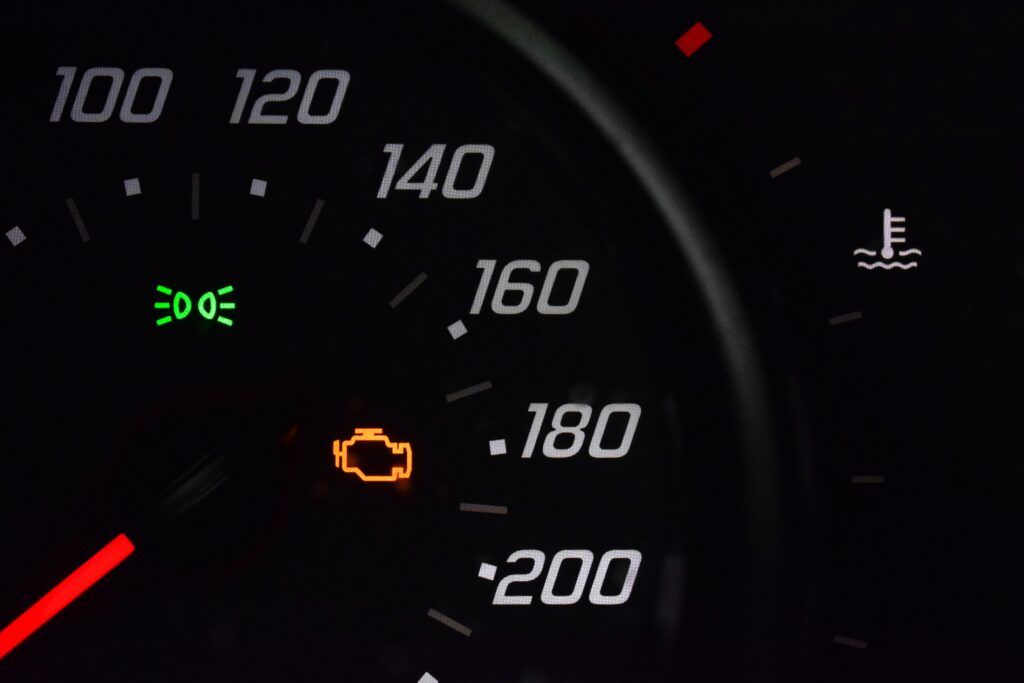
Some older cars, that are less than 10 years old, may still experience low fuel economy even after regular maintenance. The most common culprits are:
- Dirty air filters that restrict oxygen
- Underinflated tires that increase rolling resistance
- Old spark plugs that cause incomplete combustion
- Worn-out sensors (like MAF or O2 sensors) that give false readings
- Poor-quality fuel or neglected injectors that cause buildup
Recognizing these problems early will save you from a big repair bill, and it will allow you to get back your car’s fuel economy as per the factory rating.
Data Insight: The Average Fuel Economy Gap
The 2024 J.D. Power’s 2024 Used Vehicle Dependability Study reveals that by the fifth year of ownership, an average used vehicle drops its original fuel efficiency by 8-12% mostly due to the accumulation of deferred maintenance. But those who practice regular maintenance get back almost all of that fuel efficiency loss within the very first 3 months of their preventive care.
Conclusion
Used car’s fuel efficiency improvement is achievable without the need for buying costly parts or making expensive upgrades. It is really a matter of taking good care of the car and driving smart. By doing this, you will be able to keep your air filters clean, your tires properly inflated, and your engine well-tuned while at the same time saving over a hundred dollars on fuel each year and also extending the life of your car.
When you would like to lead your fuel efficiency and car reliability to the next level, you should pay a visit to SchumacherUsed.com – the dealer that you can trust for Certified Pre-Owned Chevrolet models, expert maintenance, and customer-oriented service with a long-term experience in the automotive field as a backing.
FAQs
Most of the time, these are the causes: dirty air filters, low tire pressure, and old spark plugs. A diagnostic check can fix the fuel consumption problem.
In general, the change should be made every 12,000–15,000 miles; however, if you continuously drive in dusty or polluted areas, then it would be more appropriate to change it more frequently.
Yes, for sure. Extreme situations of frequent hard braking or acceleration can lead to studies showing that fuel consumption can be reduced by up to 30–40%.
Yes, if the usage is continuous and supported by a user. They facilitate the removal of carbon residuals from the injectors, and this leads to the vehicle consumption of fuel and response.
The easiest and most effective methods of achieving the desired result are maintaining the proper tire pressure, ensuring that the car is aerodynamic, using the cruise control feature, and refraining from speeding.