


As your family evolves, so should your vehicle. You need a three-row SUV if you require adequate space for all the kids, or if you’re sick of fighting over who gets the middle seat.
Three-row SUVs have considerable passenger-hauling and towing capabilities. However, they do come with a hefty price tag, and if you’re on a tight budget, it’s advisable to take the used market route. In this article, we are helping you choose the best-used three-row SUVs for yourself.
1. 2020 Kia Telluride
Engine: 291-hp 3.8L V6
EPA-Estimated Fuel Economy: Up to 23 MPG (City – 20 MPG / Highway – 26 MPG)
Seat: Up to 8
Key Highlights
- All-new model
- Kia’s biggest SUV yet
- Standard Tech and Driver-Assistance Features
- A Top Safety Pick
- SX trims offer near luxury-vehicle experience
- Available All-wheel drive on all trims
- Best in class basic and powertrain warranty
- Can Tow up to 5000 pounds
Overview
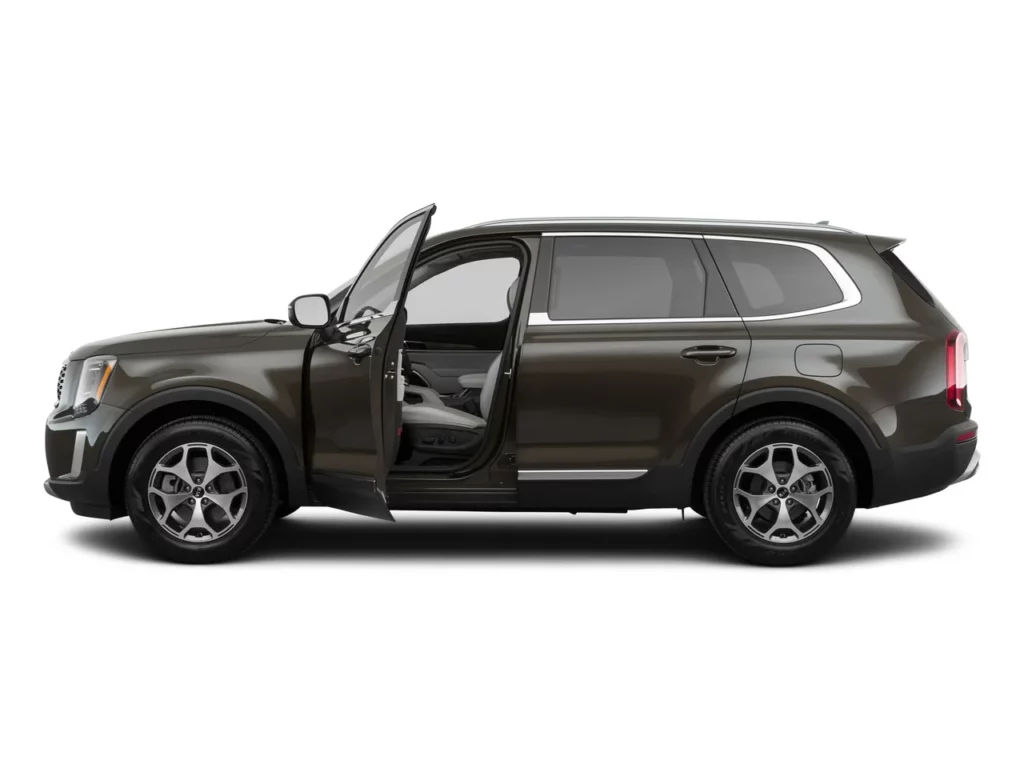
Affordability is often synonymous with economy, the 2020 Kia Telluride though, disagrees. With an interior that exudes the opulence of a true luxury SUV and a feature set that rivals vehicles costing twice as much, the Kia Telluride represents an exceptional value proposition. Not to mention, the plus-size proportions means that the 2020 Kia Telluride is a a versatile family and cargo hauler.
While the 2020 Kia Telluride shares its roots with the Kia Sorento, it offers a genuine upgrade in terms of both size and overall experience. Behind the third-row bench, it can accommodate 21 cubic feet of cargo, and with the seats folded flat, you’ll enjoy a maximum of 87 cubic feet of cargo space—almost 10 cubic feet more than the Kia Sorento.
The Telluride is designed to comfortably seat up to eight occupants, though higher trims offer the option of captain’s chairs in the second row for a seven-passenger configuration. Regardless of your choice, a one-touch sliding second-row system, operated by a button, comes standard to simplify access to the third row.
For those considering a used Telluride, models equipped with the optional self-leveling rear air suspension are a worthwhile addition, as it helps smoothen out the somewhat stiff stock ride.
For budget shoppers, the entry-level Palisade SE has more than enough standard features. But even a fully-loaded SX is a solid value for the level of luxury amenities it offers.
Pros:
- Impressive V6 engine with strong towing capabilities.
- Affordable pricing for a vehicle with a prestigious feel.
- Spacious interior, ideal for large families.
- Abundance of standard features, exceeding vehicles twice the price
Cons:
- Some competitors offer livelier performance
- Average fuel economy.
- Intrusive adaptive cruise control.
- No available powertrain upgrades
2. 2018 Chevrolet Traverse
Engine: 305-hp 3.6L V6; 257-hp 2.0L I4 Turbo
EPA-Estimated Fuel Economy: Up to 21 MPG (City – 18 MPG / Highway – 27 MPG); Up to 22 MPG (City – 20 MPG / Highway – 26 MPG)
Seat: Up to 7
Key Highlights
- Completely redesigned for 2018
- Roomiest third and second-row seats
- Plentiful interior storage options
- Standard 7-inch MyLink touchscreen infotainment system with Apple CarPlay and Android Auto connectivity
- All-wheel drive available on V6 models
- Up to 5000 pounds of towing capacity
- Big on inside but easier to drive behind the wheel
Overview
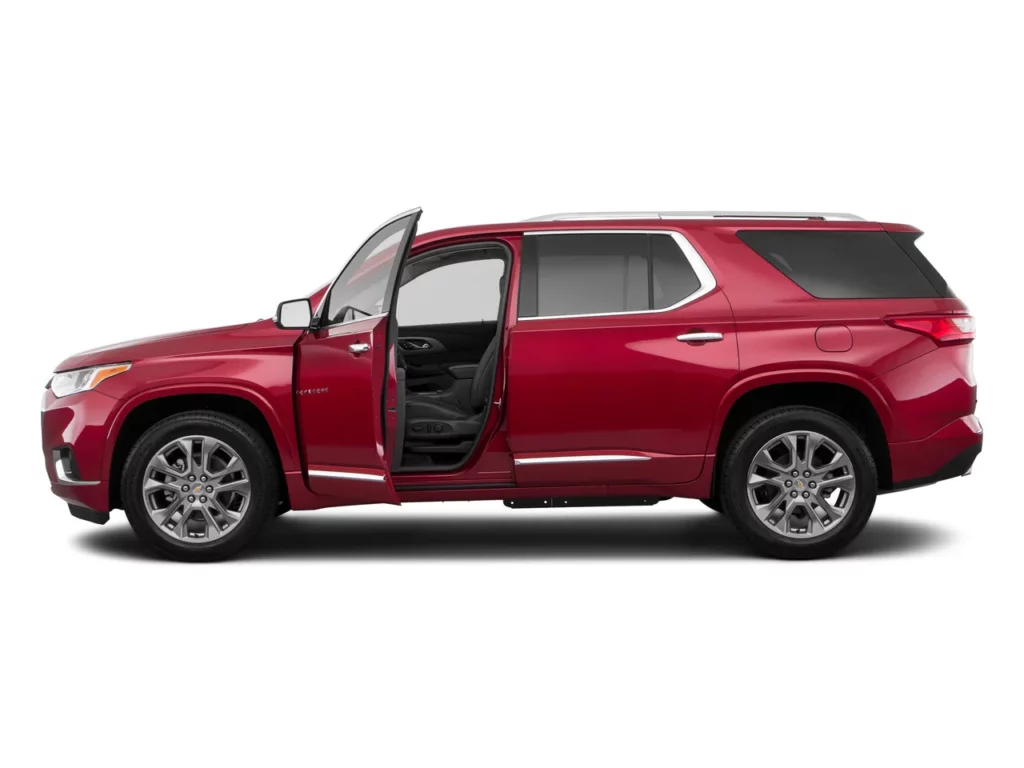
Chevrolet undertook a thorough overhaul of the Traverse in 2018, resulting in a striking transformation. This makeover not only introduced a modern, sleeker look but also incorporated cutting-edge connectivity features, upgraded interior materials, more efficient powertrains, and the latest in safety technology.
Remarkably, these changes did not come at the expense of the Traverse’s practicality. Maintaining its colossal dimensions from the previous generation, the 2018 Chevy Traverse offers a level of comfort that rivals even minivans, without the associated stigma. Cargo space is another strong suit of the Traverse, outperforming key rivals.
The Traverse’s available 310-horsepower 3.6-liter V-6 offers robust performance along with impressive fuel efficiency. The shifts from the nine-speed automatic transmission are velvety smooth too.
The Traverse impresses across the board with its comfortable ride, well-coordinated handling, and solid braking performance, making it a versatile all-rounder.
Step inside the cabin, and you’d be greeted by a remarkable level of tranquility. So much so, you’d need to sneak a glance at the tachometer to ensure the engine is running while waiting at a stoplight. Speaking of which, the Traverse features what might just be the amongst the most seamless automatic stop/start features.
Read more about the 2018 Chevy Traverse
Pros
- Infotainment tech is generous, even on the base trims
- Excels at transporting both people and cargo
- Impressive ride and handling balance
- Hushed cabin
- Latest tech and safety features
- Mammoth space while being good-to-drive
Cons
- Even the highest trims levels lack high-quality materials
- Difficult to maneuver at low speeds
- Misses rear-seat entertainment system
3. 2017 Honda Pilot
Engine: 280-hp 3.5L V6
EPA-Estimated Fuel Economy: Up to 22 MPG (City – 19 MPG / Highway – 27 MPG)
Seat: Up to 8
Key Highlights
- Top Safety Pick+
- Honda’s biggest SUV yet
- Optional All-wheel drive is available on all trims
- Up to 5000 pounds of towing capacity
- Available active driver assistance aids
- Genuinely Spacious
- Apple CarPlay and Android Auto with an 8-inch touchscreen (EX and above)
Overview
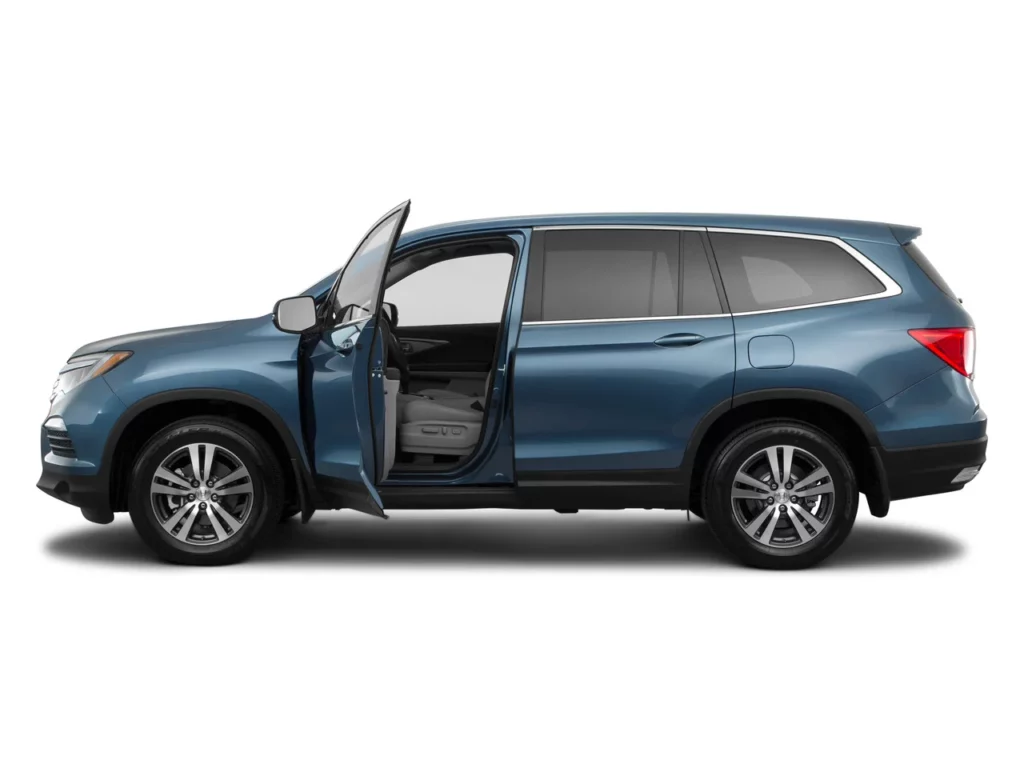
A versatile and spacious cabin, a standard V6 engine, a hint of rough road capability, along with Honda’s reputation for dependability, makes the Honda Pilot a solid three-row SUV choice to haul families or cargo.
The Pilot underwent a comprehensive redesign in 2016, followed by the introduction of the latest generation in 2023. While the current generation is promising, we find the third-generation Pilot, spanning from 2016 to 2022, to be a particularly strong value proposition in the used car market. However, we advise steering clear of the 2016 model, as it garnered frequent complaints. The 2017 models, on the other hand, are a considerably safer bet.
The 2017 Honda Pilot impresses with its capacious seating, accommodating up to eight occupants, and boasting a cavernous cargo area. The interior is also highly adaptable. If we were to nitpick, the one area that leaves room for improvement is the infotainment system. While Honda did introduce Apple CarPlay and Android Auto connectivity for 2017 (excluding the base trims), the 8.0-inch touchscreen is a letdown due to slow responses and a finicky touch screen volume slider. Not a deal-breaker though.
Under the hood, the 2017 Honda Pilot is powered by a smooth, energetic, and relatively fuel-efficient V6 engine. The overall driving experience is enhanced by a plush ride and excellent noise insulation.
Pros
- Robust V6
- Spacious and Versatile cabin
- Host of available tech and safety aids
Cons
- Less responsive automatic transmission
- Disconnected ride
- Clunky infotainment system
4. 2018 Chevrolet Tahoe
Engine: 355-hp 5.3L V8; 420-hp 6.2L V8
EPA-Estimated Fuel Economy: Up to 19 MPG (City – 16 MPG / Highway – 23 MPG); Up to 17 MPG (City – 14 MPG / Highway – 23 MPG)
Seat: Up to 9
Key Highlights
- Seating for up to nine people
- Optional All-wheel drive
- Up to 8600 pounds of towing capacity
- Above average Reliability Rating
- Punchy 420-hp 6.2L V8
- Two feet shorter than the Chevy Suburban
- Relatively easier to maneuver than other large SUVs
- Optional off-road specific Z71 package
Overview
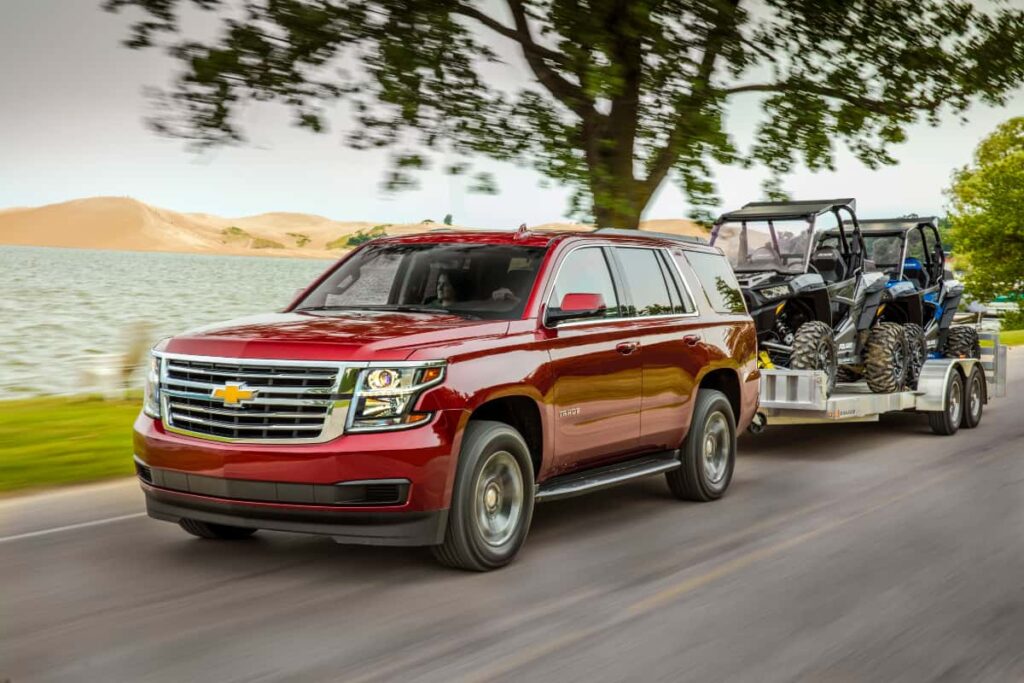
If you’re in search of something larger and more capable, the Chevy Tahoe emerges as an exceptionally used large SUV choice. With three rows of expansive seating, stellar safety and reliability ratings, impressive towing capacity, and a wealth of high-tech features, the 2018 Chevy Tahoe stands as a robust option among used large family SUVs.
One notable advantage of the 2018 Chevy Tahoe is that, despite being a truck-based body-on-frame large SUV, it’s nearly two feet shorter than Chevy’s other large SUV, the Suburban. This means you get ample space to accommodate friends, family, and gear while enjoying the benefit of a comparatively easier driving and parking experience.
While the Tahoe may not boast the roomiest third row in its class, passengers will undoubtedly appreciate the quiet and refined ride, along with comfortable seating. What’s particularly impressive is the inclusion of the intuitive and fully-featured MyLink touchscreen infotainment system with an 8.0-inch display as standard. Apple CarPlay, Android Auto along with five USB ports and five 12-volt outlets are standard too.
For the 2018 model year, Chevrolet introduced the more powerful 6.2-liter V8 engine, exclusively available on the Premier trim. This 420-horsepower powertrain not only provides the Tahoe with ample punch but also boosts towing capacity to a substantial 8,600 pounds. Nevertheless, the standard 355-horsepower V8, while not as quick as the available engine option, still delivers enough power for most tasks.
Despite being a high-riding body-on-frame SUV, the Tahoe surprises with its light steering, imparting a sense of agility. Its relatively tight turning circle also enhances maneuverability. For buyers considering anything beyond mild off-roading, it’s worth looking into models equipped with the optional Z71 package.
Read more about the 2018 Chevy Tahoe
Pros
- Stout towing capability with even the standard V8 engine
- Powerful available 6.2-liter V8 engine
- Cocooned and nicely trimmed interior
- Solid reliability ratings
Cons
- High trunk floor makes loading cargo tricky
- Not the most spacious full-size SUV
5. 2016 Mazda CX-9
Engine: 227-hp 2.5L I4 Turbo
EPA-Estimated Fuel Economy: Up to 25 MPG (City – 22 MPG / Highway – 28 MPG)
Seat: Up to 7
Key Highlights
- Interior quality punches above its weight
- Available all-wheel drive on all models
- Available i-Activsense package
- KODO-inspired attractive style
- Feels smaller behind the wheel than its size may suggest
- Up to 3500 pounds of Towing capacity
Overview
The Mazda CX-9 is one of the few vehicles that pushes the boundaries of “mainstream classification”. The latest generation of the Mazda CX-9 made its debut in 2016, showcasing KODO-inspired styling that immediately sets it apart from the utilitarian crowd.
While its cabin may not be as spacious as some of its rivals, such as the Chevy Traverse or the Honda Pilot, this three-row mid-size crossover SUV compensates with an interior design and material quality that feels way more premium than its price would suggest. And not to mention, the CX-9 delivers the unmistakable driving experience that Mazda is known for.
One notable departure from the norm is that the Mazda CX-9 does not offer a V6 engine, and its towing capacity is not a standout feature. However, the turbocharged four-cylinder powerplant in the CX-9 performs admirably, thanks to the vehicle’s relatively lighter weight and the engine’s snappy low-end responses. The CX-9 is, without a doubt, the choice for driving enthusiasts seeking a family hauler. Its ride quality strikes a perfect balance between plushness and driver engagement, often making you feel like you’re piloting a smaller SUV.
Pros:
- Attractive styling both inside and out.
- Estimated fuel economy surpasses the class average.
- Quiet and Comfortable interior during long drives.
- The top-level Signature trim is comparable to some luxury-brand rivals.
- Snappy driving dynamics.
Cons:
- Cargo capacity is less generous compared to competitors.
- Third-row seating isn’t very accommodating
- Missing a few convenience features
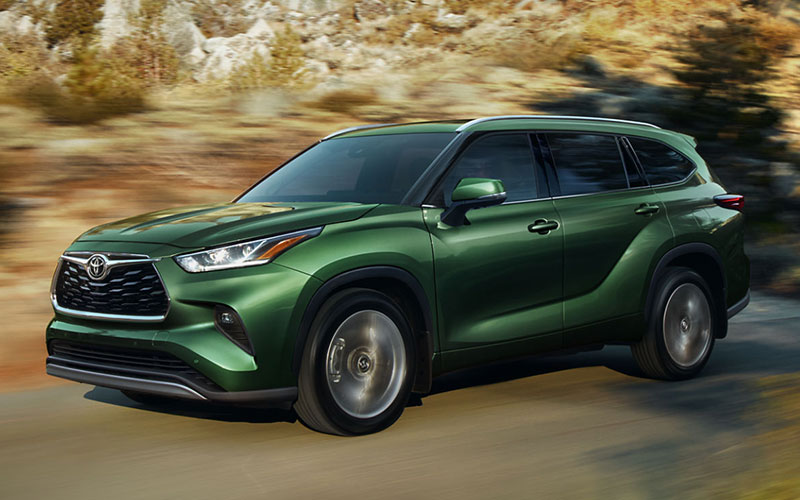
6. 2020 Toyota Highlander
Engine: 295-hp 3.5L V6; 243-hp 2.5L I4 Hybrid
EPA-Estimated Fuel Economy: Up to 24 MPG (City – 21 MPG / Highway – 29 MPG); Up to 36 MPG (City – 36 MPG / Highway – 35 MPG)
Seat: Up to 8
Key Highlights
- Fully Refreshed for 2020
- Standard Toyota’s bundle of advanced driver safety aids (Safety Sense 2.0)
- A top Safety Pick
- Standard 8-inch touchscreen with Apple CarPlay and Android Auto
- Optional All-wheel drive available on all trims
- Up to 5000 pounds of towing capacity
- Hybrid returns up to 36 mpg combined
Overview
Completely redesigned in 2020, the new Highlander is an easy family pleaser. It has a more polished interior along with plenty of new goodies that were absent in the previous model.
Even the base Highlander L trim doesn’t skimp on essentials. It comes generously equipped with a range of standard features, including an eight-inch touchscreen with smartphone integration and Toyota’s comprehensive suite of driver-assistance technologies. However, if you’re looking for added luxuries, the XLE models are our top recommendation, offering the best bang for your buck. The mid-range XLE trim includes heated front seats, a wireless smartphone-charging pad, and a power sunroof, among other desirable amenities.
The V6 delivers a smooth performance, and the highlander also offers the option of an all-wheel drive system. It however, doesn’t excel in terms of driving engagement, though, it compensates by offering a comfortable ride and a quiet cabin.
However, what really makes it stand out is its thrifty hybrid powertrain that teams up a 2.5-liter four-cylinder along with two electric motors. Toyota’s hybrid expertise is really appreciable. The hybrid not only serves solid fuel economy, but with a combined 243 horsepower, it’s no slouch either.
Pros
- Refreshed styling
- Powerful yet efficient V6
- Good visibility
- Efficient Hybrid without subpar performance
- Value-for-money Base trim
- Safe and Reliable
Cons
- Third row is strictly for kids
- Below-average cargo space with all seats up
- Lags behind classmates in driving dynamics
7. 2016 Ford Explorer
Engine: 280-hp 2.3L I-4 Turbo; 290 hp 3.5-liter V6; 365-hp twin-turbo 3.5-L V6
EPA-Estimated Fuel Economy: Up to 22 MPG (City – 19 MPG / Highway – 27 MPG)
; Up to 20 MPG (City – 17 MPG / Highway – 24 MPG); Up to 18 MPG (City – 16 MPG / Highway – 22 MPG)
Seat: Up to 7
Key Highlights
- Available All-wheel drive
- Diverse powertrain choices
- Available 365-hp Twin turbo V6
- Up to 5000 pounds of towing capacity
- Array of high-tech features and creature comforts
Overview
SUVs have taken the automotive world by storm, becoming a ubiquitous choice for all. It’s hard to overlook the iconic vehicle that played a significant role in igniting the boom of family-oriented four-door sport-utility vehicles back in the early 1990s.
While the sixth-generation model is currently in production, the fifth-generation Ford Explorer, which spanned from 2011 to 2019, remains a robust choice for those in the market for a used three-row family SUV.
This Explorer, both large and spacious, offers an array of tech features and creature comforts. Its road manners are commendable, with decent fuel economy and ample towing capacity to boot.
In 2016, the fifth-gen Ford Explorer underwent a facelift, receiving a slew of updates. Its refreshed styling appealed to a broader audience, and the addition of enhanced safety features was a welcome move.
Ford also upgraded the Explorer’s optional 2.0-liter EcoBoost four-cylinder engine to a more potent 280-horsepower 2.3-liter version, which could be paired with all-wheel drive. The standard powertrain remained a 290-horsepower V6, while an optional 365-horsepower twin-turbo 3.5-liter V6 was available, paired with the standard all-wheel-drive system, exclusive to the Sport and Platinum models. The 2016 Ford Explorer also received a revised suspension tune, prioritizing ride comfort over handling prowess.
Pros
- Abundant high-tech features
- Generous cargo space, even with the third row in use.
- Turbocharged V6 engine provides ample power.
- Offers a quiet and comfortable ride on the highway
Cons
- Perception of being larger than it is when driving.
- Second-row seats may not be as accommodating for child seats.
- Limited legroom for third-row passengers
8. 2015 Dodge Durango
Engine: 290-hp 3.6L V6; 360-hp 5.7L V8
EPA-Estimated Fuel Economy: Up to 20 MPG (City – 18 MPG / Highway – 25 MPG); Up to 17 MPG (City – 14 MPG / Highway – 23 MPG)
Seat: Up to 7
Key Highlights
- Dodge’s only SUV
- Gutsy available HEMI 5.7-liter V8 engine
- Up to 7400 pounds of towing capacity with the V8
- Handles well for its size
- Available 4WD and low-range gearing help off-road
- Relatively higher 43.3 cubic feet of cargo space
Overview
Dodge, renowned for crafting blisteringly powerful muscle cars, decided to venture into the world of three-row family SUVs, with an obvious twist. It’s not the most fuel-efficient or practical three-row crossover SUV available, but one with character, one that refuses to fade into the sea of anonymous shuttles.
Distinctive styling and a robust V8 engine, combined with class-leading towing capabilities, all without breaking the bank, is the Durango’s recipe. The current-generation Dodge Durango made its debut in 2011, with a refresh in 2014. Since then, there haven’t been many significant updates, and even older models still maintain a relevant presence. For potential buyers, our recommendation would be to consider a 2015 model.
It’s true that Dodge has had its share of reliability concerns, but when a vehicle has been in production for many years, it often means that the drivetrain, electronics, and platform have been proven and stood the test of time.
It’s important to verify whether the vehicle you’re interested in comes with the third row of seating since the base Dodge Durango comes with standard two-row seating.
The standard 293-horsepower Pentastar V6 engine delivers a smooth and potent performance. However, if your budget allows, the HEMI 5.7-liter V8 remains an appealing option, particularly if you plan to tow heavy loads (up to 7,400 pounds). Nevertheless, the V6’s maximum towing capacity of 6,200 pounds is by no means inadequate. Neither engine relies on turbocharging or hybrid technology; both are tried-and-true power plants familiar to the manufacturer.
Pros:
- Easy maneuverability, making it a breeze to drive
- Features a well-appointed and high-tech cabin
- Offers a powerful optional V8 engine
- Boasts a generous towing capacity
Cons:
- Mediocre rough-road Ride
- Trails behind competitors in terms of fuel economy
- Second and third rows may feel cramped
- Lacks ample interior storage space
9. 2017 GMC Acadia
Engine: 194-hp 2.5L I-4; 310 hp 3.6-liter V6
EPA-Estimated Fuel Economy: Up to 23 MPG (City – 21 MPG / Highway – 26 MPG); Up to 21 MPG (City – 18 MPG / Highway – 25 MPG)
Seat: Up to 7
Key Highlights
- Completely refreshed for 2017
- A top Safety Pick
- Optional All-wheel drive
- Up to 4000 pounds of towing Capacity
- 7.0-inch touchscreen on base model; 8.0-inch screen on SLT trims and up
- Standard electronic traction aids
- Great Cabin Noise Insulation
Overview
The second-generation GMC Acadia, which made its debut in 2017, has become a favored choice among families. The redesigned 2017 Acadia showcases a more attractive style, offers a full complement of modern amenities, and provides seating for up to seven passengers.
The standard powerplant is a 193-horsepower 2.5-liter four-cylinder engine, catering to fuel-conscious buyers, while the available 310-horsepower V6 is the more gratifying option. Both engines are paired with a smooth six-speed automatic transmission and power the front wheels, however available AWD does lend the GMC Acadia adequate all weather capability.
The Acadia has a compliant suspension that is not too soft but very well controlled over most road imperfections.The seats are plush and accommodating, while the cabin offers commendable insulation against road and wind noise, resulting in a very comfortable vehicle well-suited for road trips or daily errands. However, the interior design leans toward simplicity, and even the top-tier Denali trim isn’t what you call luxurious.
In a nutshell, the Acadia may not excel in any specific category within its class, but it offers ease of driving, comfort, and sufficient power for highway merging and towing. These are all essential attributes for a dependable family vehicle.
Pros
- Smooth ride
- Gutsy optional V6
- Well-laid out in-cabin controls
- Modern onboard technology keeps you connected
Cons
- Even the top-spec Denali Trims falls short in luxury
- Third-row space has significantly shrunken down compared to predecessor
10. 2020 Volkswagen Atlas
Engine: 235-hp 2.0L I-4 Turbo; 276-hp 3.6L V6
EPA-Estimated Fuel Economy: Up to 22 MPG (City – 20 MPG / Highway – 24 MPG); Up to 19 MPG (City – 16 MPG / Highway – 22 MPG)
Seat: Up to 7
Key Highlights
- 5 star NHTSA Safety Rating
- All-new model for 2018
- Volkswagen’s biggest SUV yet
- Optional All-wheel drive on V6
- Up to 5000 pounds of towing capacity
- Standard VW’s infotainment system, Car-Net 2.0
- Standard driver assistance tech
Overview
Designed by VW’s American team in Chattanooga, TN, the Volkswagen Atlas is designed to win American families.
The Atlas boasts a classic squared-off SUV body with generous dimensions, resulting in ample passenger and cargo space (a third row that can actually accommodate real live adults). Plus, family-friendly in-cabin tech and creature comforts, along with a comfortable ride, possesses the VW Atlas with all the ingredients to become a favored choice for families, all without sporting the typical “mom-mobile” image.
When considering used examples of the 2020 Volkswagen Atlas, you’ll find two engine options: a 235-horsepower four-cylinder engine, which is the standard choice, and an optional 276-horsepower V6.
While the four-cylinder engine performs adequately in real-world situations, the V6 is the preferred option, especially if you regularly transport a full load of passengers and cargo. Opting for the V6 also provides access to all-wheel drive, though it does come at the cost of fuel efficiency.
The Atlas’s finely tuned suspension endows it with a fun-to-drive character that many large crossovers lack. Furthermore, its ride comfort is exceptionally smooth, effectively absorbing and dispelling all except the most severe potholes.
For those considering a purchase, we recommend the 2020 Atlas model due to fewer reported reliability-related complaints and recalls.
Pros:
- Spacious interior accommodates passengers comfortably in all three rows
- Value-oriented pricing structure
- Well-balanced blend of precise handling and everyday comfort
Cons:
- Utilitarian interior design lacks visual flair
- Acceleration, even with the optional V6 engine, is not particularly brisk
- Trails some competitors in terms of fuel efficiency
Find Your Perfect SUV at Schumacher Used
While picking a well-maintained, affordably priced used vehicle is a piece of cake with Schumacher Used, choosing the right vehicle for yourself entails determining your priorities.
Carefully consider your cargo space and passenger needs, along with desired driving dynamics, to choose the perfect Chevy SUV for you.
For the best value, we recommend going for a used model instead of a new one. Our expert team at Schumacher Used in New Jersey is here to help you find the right used SUV to fit your lifestyle. Contact us or directly choose from a large selection of used cars for sale online.