
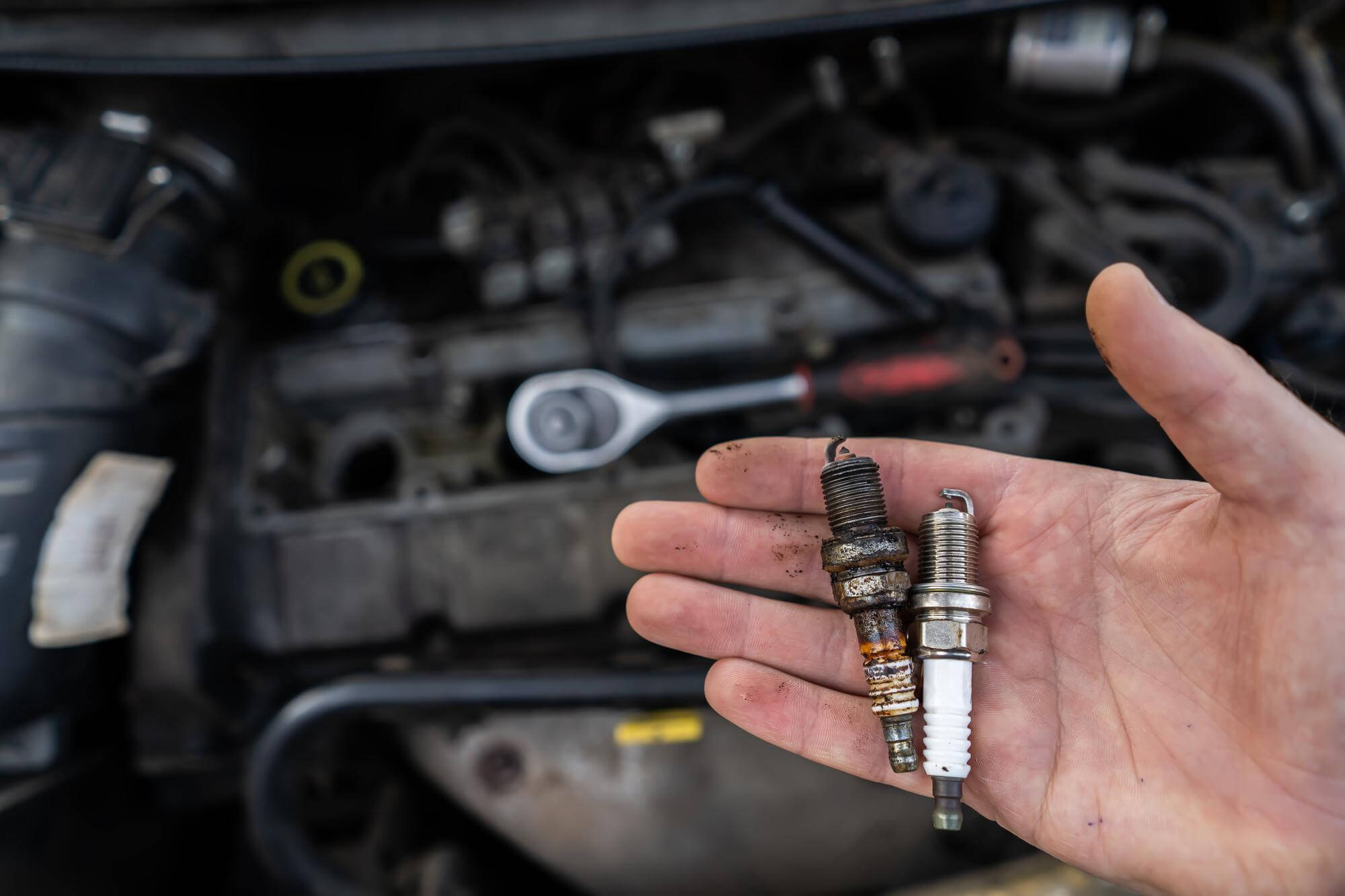

Spark plugs generate electric sparks to ignite the fuel-air mixture in the cylinders, playing a crucial role in engine performance.
Depending on the vehicle and plug type, they typically last between 30,000 and 100,000 miles and are replaced during scheduled maintenance. However, they can wear out prematurely, affecting performance and requiring early replacement. Recognizing the signs of a failing spark plug ensures your engine runs smoothly.
In this blog, we’ll cover how long spark plugs last, signs that indicate they need replacement, and the risks of driving with worn-out plugs.
How Exactly Do Spark Plugs Function?
Spark plugs are roughly the size of a finger, but they have a big job in keeping your car running smoothly. These insulated components are screwed into the cylinder head, sitting on top of your engine.
The moment you turn the key (or push the start button), spark plugs spring into action. They receive a high-voltage charge from the ignition coil or distributor and deliver a precise electric spark inside the combustion chamber. This tiny spark ignites the air-fuel mixture, triggering a controlled explosion. That burst of energy pushes the pistons down, setting the crankshaft in motion and, ultimately, driving your car forward.
Interestingly, diesel engines don’t use spark plugs at all. Instead, they rely on higher compression ratios to generate enough heat for combustion.
Symptoms of Bad Spark Plugs
When spark plugs start to fail, your engine won’t hesitate to let you know. A drop in performance, unusual noises, or starting issues can all point to trouble. Here are some key warning signs that it’s time to replace them.
Check Engine Light Turns On
A failing spark plug, bad ignition coil, or damaged spark plug wire can trigger the check engine light. If the light flashes, it could indicate severe misfires that may damage the catalytic converter.
Engine misfires
Does your car feel jerky when idling or hesitate while accelerating? That’s likely a misfire, meaning one or more cylinders aren’t firing correctly. While there are multiple reasons for misfires, they usually boil down to three main issues:
- The engine isn’t receiving enough fuel.
- There’s not enough oxygen to burn the fuel.
- The spark needed to ignite the mixture is missing.
A “spark misfire” results from faulty spark plugs or wires, disrupting combustion and causing incomplete fuel burning.
Drop in Fuel Efficiency
Noticing more frequent trips to the gas station? Worn-out spark plugs could be the culprit. When they’re in good shape, they ignite the air-fuel mixture efficiently, leaving no residues and producing minimal emissions. But when they start failing, combustion becomes incomplete, leading to higher fuel consumption and increased exhaust emissions.
Sluggish Acceleration
Struggling to pick up speed when you press the accelerator? Faulty spark plugs can disrupt the combustion process, making the engine sluggish and unresponsive.
Rough Idling
A rough, jittery idle is another telltale sign of spark plug trouble. If your engine is rattling or making knocking noises when stationary, it could be due to worn or dirty spark plugs. In some cases, simply cleaning them can fix the issue, but if poor idling persists, especially alongside missed maintenance and overdue oil changes, it may be time for a replacement.
Difficulty Starting the Car
If your car hesitates or struggles to start, several factors could be at play, including a failing ignition system, a weak alternator, or a dead battery. But if the battery is charged, and there’s no corrosion on the terminals, bad spark plugs might be the underlying issue.
Worn plugs fail to produce a strong enough spark to ignite the engine properly, leading to extended cranking or even stalling immediately after startup. Over time, this also puts extra strain on your battery and ignition system.
Physical Signs of Bad Spark Plugs
In addition to performance-related symptoms, physical inspection of your spark plugs can provide valuable insight. Here’s what to look for.
Carbon Deposits on the Tip
Pull out your spark plug and check the tip. See a dry, powdery black coating? That’s carbon buildup, which gets in the way of a clean spark, making it harder for your engine to ignite the air-fuel mixture.
Worn or Damaged Electrodes
Take a close look at the bottom of your spark plug—the part that threads into the engine. You’ll see a small dome (the central electrode) with a curved J-shaped arm arching over it (the ground electrode). These two work together to create the spark your engine needs.
Over time, that constant sparking wears them down. If the metal looks eroded or even slightly melted, that’s your cue: the spark plug isn’t firing efficiently anymore.
Oil Fouling on the Plug
If the insulator tip or electrodes are coated in oil, that’s a red flag. Oil fouling happens when engine oil seeps into the combustion chamber and coats the plug, which is likely from a leak inside the engine. This oil disrupts the spark. It also points to deeper engine issues, like worn piston rings or faulty valve seals, so don’t ignore it.
Cracked Insulators
Look at the white ceramic part of the spark plug—the insulator. If you notice any chips, fractures, or hairline cracks along its surface, the plug is no longer reliable. A cracked insulator can’t be repaired, so replacement is your only safe option.
Why Did My Plugs Go Bad So Soon? Reasons for Premature Failure of Spark Plugs
What if your spark plugs gave up earlier than expected? Let’s break down what might’ve gone wrong:
Carbon Buildup: When your engine runs rich, meaning the combustible mixture contains too much and not enough air, over time, it can create carbon deposits on the spark plugs. Once that buildup gets thick enough, it starts acting like insulation, making it harder for the spark to jump.
Oil-Soaked or Fouled: Notice black, wet spark plugs? That could be oil sneaking into the combustion chamber, which is usually a sign of worn piston rings or valve seals. When oil coats the spark plug tip, it can’t generate a proper spark.
Overheating: Excessive heat is another fast track to spark plug failure. This can happen if your spark plug gap is off, if you’re using low-quality fuel, or if the engine itself is running hot. When overheated, the electrodes of the spark plug wear out faster.
Incorrect Installation: Using the wrong type of spark plug or fitting it incorrectly can shorten its life dramatically.
How Long Do Spark Plugs Really Last?
How long spark plugs last depends on a few key things: the type of plug in your car, the way you drive, and what kind of engine you’re working with.
Let’s break it down.
If your car uses conventional copper spark plugs, you’ll typically need to replace them every 30,000 to 60,000 miles. On the other hand, more advanced plugs—like iridium or platinum—can easily stretch to 100,000 miles or even beyond. Many modern engines use iridium plugs that comfortably reach the 80,000 to 120,000-mile mark.
But there are exceptions. Turbocharged engines, even with iridium plugs, might require fresh ones, as low as, every 30,000 miles. So it’s not one-size-fits-all.
To know exactly what your car needs, always check your owner’s manual. That’s your most reliable source for the recommended replacement interval. Spark plugs are already on your vehicle’s maintenance checklist for a reason. Replacing them at the right time keeps your engine performing at its best and helps you avoid bigger (and more expensive) problems down the road.
Certain driving conditions can shorten spark plug life. Do a lot of stop-and-go driving? Regularly tow heavy loads? Use low-grade fuel? All of these can cause your spark plugs to wear out sooner than expected.
If your car starts misfiring, idling rough, or showing signs of sluggish acceleration, don’t ignore it. These symptoms can point to worn-out spark plugs, and the longer you wait, the more damage they can cause. A misfiring spark plug can even harm your catalytic converter, leading to an expensive repair that could have easily been avoided.
Should You Replace Spark Plugs During Scheduled Maintenance Even If the Car Feels Fine?
If the manufacturer manual recommends it, then it’s a yes. Spark plug replacement isn’t about fixing a failure; it’s about preventing one. If your car is due based on the manufacturer’s schedule, it’s time. You shouldn’t wait for symptoms to appear before taking action.
Think of it like changing the oil, you don’t wait for the engine to seize before doing it, right? Replacing spark plugs on time ensures your engine runs efficiently and protects critical components like the catalytic converter from damage. Skipping this step or delaying it might save time and cost today, but it could hurt your pocket far more tomorrow.
How to Increase the Lifespan of Your Vehicle’s Spark Plugs?
Want to get the most mileage out of your spark plugs? It’s easier than you might think—as long as you take a few smart steps and pay attention to the things that can wear them out faster than they should.
- Your driving habits matter more than you might realize. If you tend to hit the gas hard or mostly take short, stop-and-go trips, your spark plugs are under more strain and may wear out quicker.
- The way your engine is maintained also plays a big role. A dirty air filter, an imbalanced fuel mix, or even overdue oil changes can all shorten the life of your spark plugs.
- Don’t overlook fuel quality either. Poor-grade fuel or ones loaded with unnecessary additives can lead to carbon deposits on the spark plugs, making them less efficient and forcing your engine to work harder. On top of that, harsh weather, whether it’s extreme heat, cold, or moisture, can also take a toll on how long your spark plugs last.
So, what can you do about it?
Start with the basics: always use the right spark plugs for your engine. Your owner’s manual will tell you exactly what type and heat range are best suited for your vehicle. Stick to that, and you’re already ahead of the game.
Next, keep your engine in good shape. Change air filters regularly, clean the engine bay when needed, and don’t skip scheduled tune-ups. Keeping dirt, debris, and gunk out of your engine helps prevent spark plug fouling and lets them do their job for much longer.
What Happens If You Keep Driving with Bad Spark Plugs?
If your spark plugs are worn out, ignoring the signs can not just make your engine run a little rough, but also open the door to serious, expensive damage.
When a spark plug can’t fully ignite the air-fuel mixture, your engine has to work harder with less power. That means lower fuel efficiency, sluggish acceleration, rough idling, and yes, more strain on your engine overall. But the longer you drive this way, the worse it gets.
So, what exactly goes wrong under the hood?
When a spark plug misfires or can’t spark properly, some of that fuel doesn’t burn at all. This leads to two big problems. First, your car’s performance drops because your engine isn’t running on a clean, full combustion cycle.
Second, and this one’s critical, that unburnt fuel can damage your catalytic converter. It can cause clogging, overheating, or even total failure, which is a repair you definitely want to avoid (it’s one of the most expensive parts to replace).
Modern engines are smart, they try to compensate by firing the spark plug multiple times to complete the burn. But even then, the process isn’t as effective, and it can hide the usual warning signs of a misfire. That delay can lead to even more trouble.
On top of that, raw fuel washing over your cylinder walls strips away the protective oil layer. Without that lubrication, the metal-on-metal contact can cause serious internal damage to your engine.